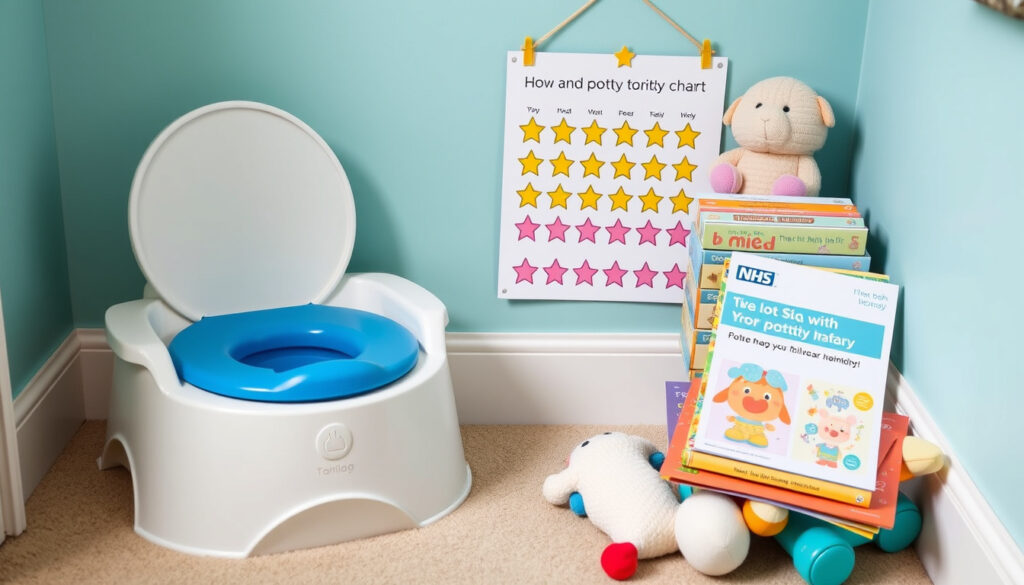
Potty Training – Complete UK Guide with NHS and ERIC Advice
Deciding when to start potty training is one of the most common questions for parents of toddlers. The consensus from leading UK health organisations is that while there is a general age range, the most reliable guide is your child’s individual readiness, not a date on the calendar.
Most children begin to show signs of readiness between 18 months and 3 years. Starting too early, before your child is physically or emotionally ready, can make the process longer and more stressful for everyone.
Look for readiness signs between 18 months and 3 years.
Use consistency, praise, and a routine that suits your child.
Choose from potties, toilet seats, or training pants based on your child’s needs.
Regression and refusal are common. Seek support from ERIC UK or a health visitor if needed.
Key Insights for a Smooth Start
- Potty training is a developmental milestone, not a race. Starting too early can prolong the process.
- Consistency and positive reinforcement are the two most cited success factors across all authoritative sources (NHS, Mayo Clinic, ERIC).
- The average age for daytime dryness in the UK is around 2.5 to 3 years, but night-time dryness often takes longer (up to age 5).
- Girls tend to show readiness slightly earlier than boys, but individual variation is huge.
- Pants (e.g., pull-ups) can be useful for some children but may feel too similar to nappies for others; some experts recommend going straight to underwear.
Snapshot Facts: Potty Training at a Glance
| Fact | Detail |
|---|---|
| Optimal age range | 18 months – 3 years |
| Average completion time | 3-6 months for daytime dryness |
| Key readiness sign | Staying dry for 2+ hours or waking dry from naps |
| Night-time training | Often achieved later; limit fluids before bed |
| UK support organizations | ERIC (eric.org.uk), NHS, Health Visitors |
| Common issue | Regression is normal; often triggered by stress or change |
How to Potty Train: Step-by-Step Methods (NHS & UK Advice)
Once you have spotted readiness signs, you can begin a structured approach. NHS guidance emphasises a calm, consistent, and positive method. There is no single “correct” technique, but several core steps appear across UK health advice.
Building a Routine
Start by putting nappy changes in the bathroom to build the connection between wees, poos, and the toilet. Let your child sit on the potty after meals, after waking, and at other predictable times. Keep a potty both upstairs and downstairs so it is always easy to reach.
Practical Tip
Encourage your child to sit on the potty for just 1 to 5 minutes at a time. Keeping them there longer can lead to resistance. Use books, toys, or stories to help them sit still.
The 3-Day Method
The 3-day potty training method involves a concentrated effort over a long weekend, with the child in underwear and frequent trips to the potty. While popular, evidence on its superiority over gradual methods is mixed. The NHS does not endorse any one method but notes that intense approaches can work for some families if the child is truly ready.
Night-Time Training
Focus on daytime training first. Night-time dryness often takes much longer and usually follows a different developmental path. Start night training only when your child is staying dry for stretches during the day or waking with a dry nappy in the morning.
Night-Time Preparation
Common helpful steps include asking your child to use the potty last thing before bed, keeping the potty close by at night, and ensuring the last drink is about an hour before bed. Avoid caffeinated or fizzy drinks such as tea and hot chocolate before bed.
Potty Training for Girls vs Boys: What’s Different?
UK health guidance does not give a major sex-based difference in the basic age to start. NHS sources stress that all children are different and train at different ages, regardless of gender. While some research suggests girls may show readiness slightly earlier, the variation between individual children is far greater than any average difference between boys and girls.
If a child has additional needs, readiness and timing may differ, but the same core signs of readiness still apply.
Choosing the Right Potty Training Gear: Seats, Pants, and More
The choice between a potty chair, a toilet seat reducer, or training pants depends on your child’s confidence and your home setup. NHS-style resources typically say you can start with a potty or the toilet depending on what suits your child.
Potty vs Toilet
Some local NHS guidance suggests deciding whether to start with a potty or go straight to the toilet, then building a routine around that choice. A potty is portable and can be kept in the room where your child plays. A toilet seat reducer with a step stool helps your child feel secure on the main toilet.
Training Pants and Pull-Ups
Training pants (often cloth and reusable) and pull-ups (disposable) can help during the transition period, especially for night-time or outings. However, some children may find pull-ups feel too similar to nappies, which can slow progress. Some experts recommend switching directly to underwear.
Common Concern
If your child is scared of the potty, let them play with it, read books about it, and sit on it fully clothed. Never force them. Fear is a common reason for resistance and requires patience, not pressure.
Common Potty Training Problems & When to Seek Help
Accidents, refusal, and regression are all normal parts of the process. If there are major routine changes or disruptions, some NHS guidance suggests waiting for a calmer time to start. If your child resists, try shorter, more positive potty sits and reduce pressure.
If progress stalls, look again for patterns in wees and poos and adjust your timing. If dryness is not developing as expected, local NHS leaflets advise speaking to a health visitor, school nurse, or children’s continence service.
Can You Potty Train a Dog? A Quick Guide
While NHS and ERIC guidance is focused entirely on children, house training a puppy is a separate process. Pet owners seeking advice on puppy toilet training should consult a veterinarian or professional dog trainer, as the methods and timelines differ completely from those used for children.
Typical Potty Training Timeline
- 12-18 months: Introduce the potty. Let child sit on it clothed. No pressure.
- 18-24 months: Look for readiness signs. Start training if child is showing interest.
- 2-3 years: Active potty training. Daytime dryness achieved by most during this period.
- 3-4 years: Night-time dryness. Some children need longer; pull-ups at night are normal.
- 4+ years: Full independence. If difficulties persist, consult ERIC or a health visitor.
What We Know and What Remains Unclear
| Established Information | Information That Remains Unclear |
|---|---|
| Most children are ready between 18 months and 3 years. | There is no single “best age” to start; it varies per child. |
| Signs of readiness include staying dry for 2+ hours and showing interest in the toilet. | The 3-day method works for some but not all; evidence on its superiority is mixed. |
| NHS and ERIC are authoritative UK sources for potty training advice. | Whether to use pull-ups or underwear straight away is debated among experts. |
| Regression is common and usually temporary. |
Context: Why This Topic Matters for UK Families
Potty training is a major developmental milestone that can cause anxiety for parents. UK parents often seek clear, authoritative guidance that respects individual differences. The NHS/ERIC consensus emphasizes waiting for readiness rather than pushing early training. This aligns with modern pediatric advice that prioritizes child-led learning. Product choices and method selection are secondary to consistency and a positive approach.
What the Experts Say: Quotes and Key Sources
“Potty learning means helping your child use a potty or toilet as part of their overall learning, usually around 6-9 months (referring to early introduction, not mastery).”
— ERIC UK
“The first step is to get your child ready for potty training. You’ll teach your child the basics about concepts such as toilets and passing urine and stool.”
— Mayo Clinic
“Most children are ready to be potty trained between 18 months and 3 years old. You know your child better than anyone else so don’t feel you have to start.”
— NHS Derbyshire
Summary: Potty Training Without the Pressure
Potty training is a individual journey for every family. The best approach is to watch for your child’s unique signs of readiness, stay calm with accidents, and use consistency and praise. If you need more support, Healthy Meals for Weight Loss – Budget, High-Protein & Beginner Recipes is available, though it covers a different topic. For potty-specific help, you can reach out to your health visitor or visit ERIC UK for expert guidance.
Frequently Asked Questions About Potty Training
Can I start potty training at 12 months?
While you can introduce the potty, most children are not developmentally ready until 18 months or later. Starting too early can lead to frustration.
How do I potty train a stubborn child?
Patience is key. Take a break for a few weeks, then try again. Use praise and rewards. If resistance continues, consult a health visitor.
What if my child is scared of the potty?
Let them play with the potty, read books about it, and sit on it fully clothed. Never force them.
Are potty training pants the same as pull-ups?
Potty training pants are often cloth and reusable; pull-ups are disposable. Both can help, but some children do better by switching to underwear.
Does the NHS recommend a specific method?
The NHS does not endorse one single method but emphasizes readiness, consistency, and positive reinforcement.
How long does it take to potty train a child?
Daytime dryness typically takes 3 to 6 months, but some children learn in a few weeks. Night-time dryness often takes longer.
What should I do if my child regresses?
Regression is normal and often linked to stress or change. Stay calm, go back to basics, and avoid punishment.
Can I potty train my dog the same way?
No. Dog training uses different methods and timelines. Consult a veterinarian or professional trainer for house training a puppy.
Where can I find potty training help near me?
Your health visitor or local children’s continence service can offer support. National resources include ERIC UK (eric.org.uk) and the What Is a Colonoscopy – Complete Guide to the Procedure guidance (unrelated topic).
More related posts
 Ed Sheeran Visiting Hours Lyrics – Full Song Meaning & Backstory
 Wallace and Gromit Vengeance Most Fowl – Full Viewing Guide
 Bonnie Tyler – Biography Songs Husband Net Worth and Health Update
 Ryan Gravenberch – Career Stats Position and Personal Life
 Cast of Brooklyn Nine-Nine – Actors, Characters and Seasons Guide
 Las Vegas – Complete 2025 Travel Guide
 How Old Wa Tom Crui e in Top Gun – Age at Filming & Relea e
 London Weather 7 Days – 25°C Highs Mostly Dry