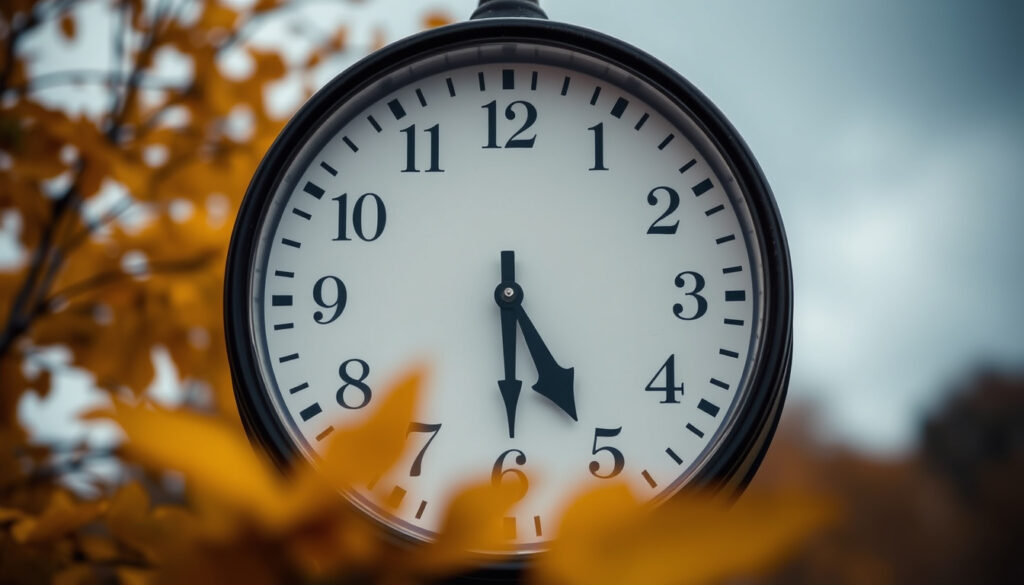
When Do the Clocks Go Back – UK Date & Why They Change
The clocks in the UK go back on Sunday 25 October 2026 at 2:00am, marking the end of British Summer Time (BST) and the return to Greenwich Mean Time (GMT). That morning, 2:00am BST becomes 1:00am GMT, giving the country an extra hour of the day. The change follows a fixed rule: clocks go back on the last Sunday of October every year.
For many people, the autumn clock change means a welcome lie-in or an extra hour of weekend time. But the shift also affects sunrise and sunset times, train schedules, and the daily routines of millions. Understanding the exact date, the reason behind it, and the history of the practice helps take the confusion out of the twice-yearly adjustment.
This article answers the most common questions about the 2026 clock change, from the time of the switch to the myths that persist around it.
When Do the Clocks Go Back in 2026?
The UK clocks go back on Sunday 25 October 2026. The change occurs at 2:00am BST, when the time becomes 1:00am GMT. This is the standard annual transition from British Summer Time to Greenwich Mean Time, as confirmed by the UK Government and the Royal Museums Greenwich.
Upcoming UK Clock Change Dates
Spring: 30 March at 1am
Autumn: 26 October at 2am
Spring: 29 March at 1am
Autumn: 25 October at 2am
Spring: 28 March at 1am
Autumn: 31 October at 2am
Spring: 26 March at 1am
Autumn: 29 October at 2am
Key Insights About the Clock Change
- The UK always changes clocks at 2am on the last Sunday of March (forward) and the last Sunday of October (back).
- The common saying “spring forward, fall back” helps remember the direction, though “fall” is an American term.
- Daylight Saving Time was introduced permanently in the UK during WWI to save fuel and increase productivity.
- Contrary to a popular myth, farmers generally oppose DST because it disrupts livestock feeding routines.
- In 2026, the clocks go back on Sunday 25 October at 2am, giving residents an extra hour of sleep.
Quick Facts at a Glance
| Fact | Detail |
|---|---|
| Next clock change (back) | 25 October 2026 at 2am |
| Transition | BST ends, GMT begins |
| Extra hour? | Yes (clocks go from 2am to 1am) |
| Fixed rule | Last Sunday in October (back), last Sunday in March (forward) |
| Origin | Introduced by William Willett in 1907, adopted 1916 |
| Current law | Summer Time Act 1976 (UK) |
| Farmers myth | Farmers generally oppose DST; myth stems from early 20th century lobbying |
Why Do the Clocks Go Back at 2am?
The choice of 2am is not arbitrary. It was selected as a middle ground that minimises disruption to rail schedules and avoids changing the time during peak travel or late-night social hours. According to the UK Government, the time is also when fewer people are active, reducing confusion and the chance of errors.
The 2am changeover avoids interfering with early morning workers, bar closing times, and the majority of train departures. It also aligns with historical convention: when DST was first introduced in 1916, the railways already used 2am as a standard time for timetable adjustments, so the habit stuck.
Who Introduced Daylight Saving Time?
The idea of shifting clocks to make better use of daylight was championed by builder and outdoorsman William Willett. In 1907 he published The Waste of Daylight, arguing that the UK could save energy and enjoy longer summer evenings by moving the clocks forward. Parliament rejected his bill in 1908, but the Summer Time Act was passed in 1916 as a wartime measure, formally introducing British Summer Time, as recorded by the Royal Museums Greenwich.
Is the UK Planning to Stop Changing Clocks?
No current plans exist to abolish the twice-yearly change. Although the European Union debated ending seasonal clock changes in 2019, the UK left the EU before any decision was finalised. The UK government has not introduced any legislation to adopt a permanent time zone. The schedule remains fixed by the Summer Time Act 1976.
Do the Clocks Go Forward or Back in October?
In October, clocks go back. The direction can be confusing, especially when thinking ahead to the spring change. A widely used memory aid is “spring forward, fall back,” though “fall” is American English. In the UK, the phrase is still commonly understood.
How to Remember the Direction
Think of the seasons: March (spring) you lose an hour; October (autumn) you gain an hour. If you prefer a visual trick, imagine the clocks “falling back” onto the pillow for an extra hour of sleep.
Do All Countries Change Clocks in October?
No. The United States changes clocks on the second Sunday of March and the first Sunday of November. The European Union changes on the last Sundays of March and October, the same as the UK. Many countries near the equator do not observe DST at all, because daylight hours vary little across the year.
A common story claims that DST was introduced to help farmers. In reality, many farmers actively oppose the change because it disrupts livestock feeding and milking schedules. According to the Royal Museums Greenwich, some farmers have expressed concern about routine changes, but the idea that all farmers support DST is inaccurate.
What Happens to Dawn and Dusk After the Change?
When clocks go back, sunrise and sunset both occur one hour earlier. In late October, the UK already has relatively short days, so the change means sunrises that are earlier in the clock afternoon but also earlier sunsets, shifting daylight to the morning hours. This can make evenings feel much shorter but brightens the start of the day for commuters.
History of Daylight Saving Time in the UK
The practice of moving clocks forward and back has a long history. Below are the key milestones, as documented by the Royal Museums Greenwich and other sources.
- 1784 – Benjamin Franklin first proposes saving daylight while serving as US ambassador to France.
- 1907 – William Willett publishes The Waste of Daylight.
- 1916 – The UK adopts DST (Summer Time) as a wartime measure.
- 1968–1971 – British Standard Time experiment (clocks not put back) is trialled and then abandoned.
- 1972 – Current rule is codified: clocks go forward last Sunday March, back last Sunday October.
- 2026 – BST ends on 25 October; next scheduled change.
Is the End of BST Certain?
Established information
- The rule is fixed by UK law: clocks go back on the last Sunday of October at 2am.
- Dates are known many years in advance.
- The Summer Time Act 1976 governs the schedule.
Information that remains unclear
- There is no current uncertainty about the 2026 date.
- Future changes could occur if UK or EU proposals to abolish seasonal time changes are adopted, but no legislation is pending.
- No formal consultations or bills are active as of early 2025.
What Is the Real Impact of Changing the Clocks?
Daylight Saving Time is observed by more than 70 countries worldwide. The UK aligns its changeover dates with the European Union’s system (last Sunday March and October), a legacy of pre-Brexit coordination. The choice of 2am was historically selected to minimise disruption to train schedules and early workers.
An extra hour of morning daylight comes at the cost of darker evenings. Studies on energy savings show mixed results: modern lighting and heating habits have reduced the gains that existed a century ago. Health impacts are also debated, with some research showing a spike in accidents and heart attacks after the spring change but a smaller effect in autumn. Road safety improves slightly in the autumn thanks to brighter mornings.
What Do Official Sources Say?
“The clocks will go back in the UK on Sunday 25 October 2026 at 2am.”
– Royal Museums Greenwich
“In the UK the clocks go forward 1 hour at 1am on the last Sunday in March, and back 1 hour at 2am on the last Sunday in October.”
– UK Government
“BST will end this year on 25 October when clocks in the UK ‘fall back’ from 02:00 to 01:00.”
– BBC Weather
What Should You Do Next?
Set a reminder for the weekend of 24–25 October 2026 to move any analogue clocks back one hour before bed on Saturday evening. Most smartphones and computers update automatically, but it is wise to check that automatic time zone adjustment is enabled in your device settings. For more UK date-based events throughout the year, see What Day Is Mother’s Day 2025 – UK and US Dates Explained and Bank Holiday May 2025 – Dates for England, Scotland, Wales and NI.
Frequently Asked Questions About Clock Changes
Why do the clocks go back at 2am?
The 2am time was chosen as a middle ground that minimises disruption to rail schedules and avoids changing time during peak travel. It also ensures minimal impact on early workers and bar closing times.
Do I lose or gain an hour?
When clocks go back (autumn), you gain an extra hour. When they go forward (spring), you lose an hour.
Do all countries change clocks on the same day?
No. The US changes clocks on the second Sunday of March and first Sunday of November. The EU changes on the last Sundays of March and October. Many countries near the equator do not observe DST.
Why do farmers oppose daylight saving time?
Contrary to popular belief, farmers often oppose DST because it disrupts animal feeding schedules and morning routines. The myth that farmers promoted DST originated from pro-DST lobbying by urban businesses in the early 1900s.
Will the UK stop changing clocks?
No current plans. The UK left the EU but retains the same schedule. Past proposals (e.g., to stick with GMT+1 year-round) have not been adopted.
What is British Summer Time (BST)?
BST is the UK’s daylight saving time zone (GMT+1) observed from late March to late October. It is also known as ‘Summer Time’.
More related posts
 Love Island 2025 Cast – Confirmed Islanders and Bombshells
 Eddie Howe – Still Newcastle Boss, Career and FAQs
 Who Won the Snooker Last Night – O’Sullivan, Murphy, Ding Qualifier Wins
 Jurrien Timber – Injury Update, Return Date, Stats
 Bonnie Tyler – Biography Songs Husband Net Worth and Health Update
 Arsenal F.C. vs Bayern Munich Standings – Full Champions League Record
 Death in Paradise Season 13 – Full Episode and Cast Guide
 Owen Hargreaves – Net Worth, Clubs, and Punditry Career