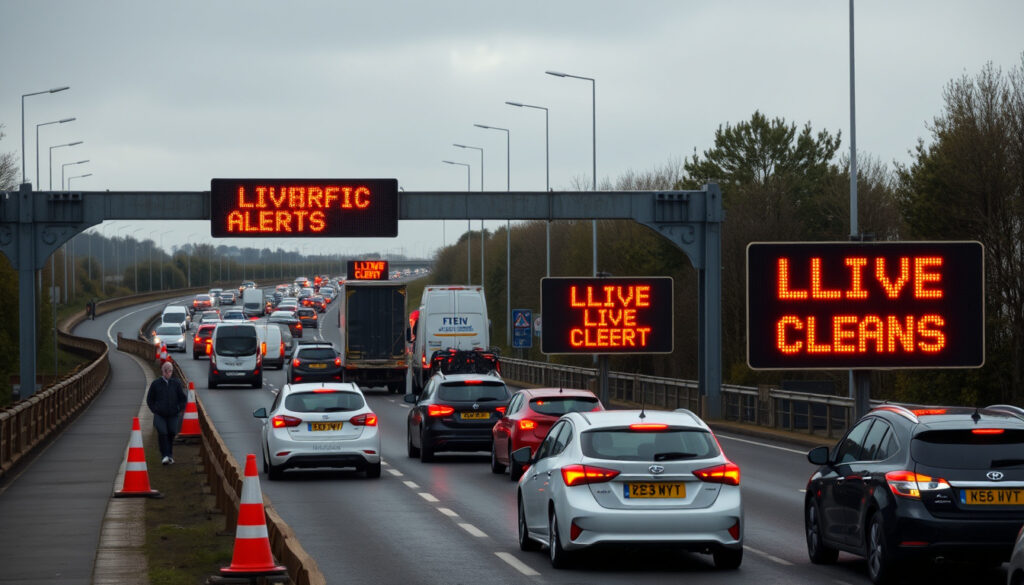
Traffic News Near Me – Live UK Road Updates & Alerts
Finding accurate, up-to-the-minute information about road conditions in your area has become essential for anyone who travels by car. Whether facing an unexpected collision, planned roadworks, or heavy congestion, knowing what lies ahead can mean the difference between a smooth journey and hours of frustration. Several established services across the United Kingdom now offer real-time traffic intelligence, combining official highway data with user-reported information to paint a comprehensive picture of conditions on motorways and major roads.
The challenge for many drivers is identifying which sources deliver genuine live updates rather than static information. Official bodies like National Highways, Traffic Scotland, and Traffic Wales operate around the clock, refreshing their alerts every few minutes. Meanwhile, motoring organisations such as the RAC and AA maintain their own networks, feeding incident data into route planners and dedicated traffic news tools. Understanding what each service offers—and where gaps might exist—helps drivers make informed decisions before and during their journeys.
Live Traffic Updates Across the United Kingdom
The UK’s traffic information ecosystem spans multiple official and commercial providers, each covering different geographic areas and road types. National Highways manages England’s motorway network and major A-roads, publishing real-time alerts through Traffic England. Traffic Scotland monitors trunk roads across Scotland, while Traffic Wales maintains a priority alert system for Welsh motorways and trunk routes. These three bodies form the official backbone of the UK’s live traffic reporting infrastructure.
National Highways covers England exclusively; Traffic Scotland focuses on Scottish trunk roads; Traffic Wales monitors Welsh motorways and trunk routes. Cross-border journeys may require checking multiple sources for complete information.
| Service Provider | Geographic Coverage | Update Frequency | Access Methods |
|---|---|---|---|
| RAC Traffic News | UK-wide, motorways and A-roads | Live updates | Website, postcode search |
| AA Route Planner | UK-wide, major cities covered | 24-hour Roadwatch | Website, phone (84322) |
| National Highways | England motorways and A-roads | Every 5 minutes | Traffic England, map filters |
| Traffic Scotland | Scotland trunk roads | Frequent bulletins | Live map, list view, radio |
| Traffic Wales | Wales motorways and trunk roads | Priority list updates | Road traffic map |
The RAC and AA complement official sources by aggregating data from multiple feeds into user-friendly interfaces. The RAC route planner traffic news service allows drivers to enter their postcode or planned route, returning localised incident information alongside flow data from motorway sensors. The AA offers similar functionality through its route planner traffic news tool, which integrates 24-hour Roadwatch reporting.
Key Insights for Finding Real-Time Road Information
- National Highways updates its Traffic England alerts every five minutes, marking incident statuses from “occurring” through to “cleared”
- Traffic Wales currently lists over 37 priority alerts across its motorway and trunk road network, updated continuously
- Entering a postcode on RAC or AA services returns locally relevant incidents within seconds
- CCTV camera feeds from Motorway Cameras supplement official text-based alerts with visual verification
- Regional police forces maintain localised incident feeds through police.uk, though coverage varies by force area
- BBC regional news integrates traffic updates through its local feeds, though no dedicated national live traffic page exists
Current Active Incidents on UK Motorways
| Location | Nature of Incident | Current Status | Source |
|---|---|---|---|
| M40 southbound J5-J4 | Road traffic collision | Cleared | National Highways |
| A2070 between A2042 and M20 J10A | Carriageway closure for repairs | Northbound delays expected | National Highways |
| M1 (unspecified location) | Severe incident | Ongoing | National Highways |
| A470 Nantgarw to Coryton | Congestion | Delays possible | Traffic Wales |
| M4 eastbound J33 Capel Llanilltern | Congestion on offslip | Ongoing | Traffic Wales |
| A4042 Penperlleni | Road closed for improvements | Night closures (2000-0600) | Traffic Wales |
Road Accidents and Incidents Near You
When an accident occurs on roads near your location, the time between the incident happening and information becoming publicly available can vary considerably. Major motorway collisions involving injuries or significant vehicle damage typically appear on official alert systems within minutes, particularly when they require lane closures or affect traffic flow. However, minor incidents on quieter roads may not appear on any centralised system until much later, if at all.
How Incident Reporting Works
The reporting chain for road accidents typically begins with emergency services attending the scene. Police forces log incidents through their control rooms, with data then flowing to regional traffic control centres. Highways England, Transport for London, and their counterparts in Scotland and Wales maintain communication links with these centres, translating raw data into structured alerts. Commercial providers like the RAC and AA tap into these feeds, alongside their own networks of patrols and crowd-sourced reports from members.
Minor incidents without significant impact on traffic flow may take longer to appear in public feeds. For the most current information on local incidents, checking your regional police force’s traffic page on police.uk provides more granular coverage than national aggregators.
Fatal and Serious Incidents
Tragic events involving fatalities or serious injuries receive priority attention from all traffic information systems. These incidents often trigger extended road closures for investigation and recovery work, with official sources prominently displaying the associated disruption. The National Highways travel alerts page provides details on major incidents affecting England’s motorways, while Traffic Wales maintains its own priority alert system for significant events on Welsh roads.
For those seeking to understand road safety patterns in their area, official statistics from the Department for Transport provide annual breakdowns of casualty locations and road types. However, these datasets operate on a different timescale to live traffic feeds, offering historical context rather than real-time awareness.
BBC Traffic News: What the Broadcaster Offers
The BBC does not maintain a dedicated national live traffic page comparable to those operated by official highway authorities. Instead, the broadcaster integrates traffic information into its regional news services, where road conditions feature as part of broader local news coverage. London’s BBC feed, for example, includes a traffic section accessible at london.bbc.co.uk/traffic, while other regions incorporate road updates into their standard news bulletins and online articles.
Finding BBC Traffic Information
To access BBC traffic updates, visitors typically need to navigate to their regional BBC website and locate the local news section. From there, traffic information appears alongside other breaking news stories, often with a focus on incidents affecting significant congestion or involving emergency response. This arrangement differs fundamentally from purpose-built traffic services, which treat road conditions as their primary content rather than a subset of general news.
BBC regional feeds do not provide comprehensive motorway monitoring. For complete coverage of England, Scotland, or Wales, official sources like Traffic England, Traffic Scotland, and Traffic Wales offer more detailed and purpose-built alerting systems.
Cross-Referencing with Other Sources
Because the BBC draws much of its traffic information from the same underlying sources used by official bodies and motoring organisations, comparing reports across multiple platforms often yields the most complete picture. If a particular incident appears on BBC regional news, checking the corresponding entry on National Highways, RAC, or AA typically reveals additional context—particularly regarding estimated clearance times and alternative route recommendations.
Accessing RAC Traffic News Updates
The RAC positions its traffic news service as a practical tool for everyday drivers, combining official incident data with information gathered from its nationwide network of patrol officers and member reports. The service covers motorways from M1 through M61, major A-roads, and key urban routes in cities including London and Manchester. Users can search by postcode, view route-specific conditions, and save preferences for regular journeys.
Features of the RAC Traffic News Tool
- Postcode-based search returning nearby incidents and roadworks
- Route planning integration showing conditions along proposed journeys
- Default location saving for returning visitors
- Real-time incident updates combining official and member-reported data
- Mobile-friendly interface suitable for access while travelling
The RAC traffic news page aggregates information from multiple official sources while adding its own assessment layer. This approach means the service often flags incidents before they appear on some official feeds, though users should verify particularly time-sensitive information directly with the relevant highway authority.
Complementary AA Roadwatch Service
The AA’s Roadwatch service operates on a 24-hour basis, providing live traffic reports through both its website and telephone hotline (84322). This phone-based access distinguishes the AA offering from purely online services, enabling drivers without smartphone access to obtain current conditions before departing. The AA route planner traffic news integrates these reports with standard route planning functionality.
Timeline of Recent Traffic Incidents
Understanding how traffic incidents develop and resolve over time helps contextualise the information provided by live update services. The following timeline illustrates the typical progression from incident occurrence through to clearance, based on documented events from official sources.
- Incident occurs: Collision or obstruction reported to emergency services or traffic control centre
- Initial alert: National Highways or regional authority publishes priority alert with basic details (typically within 5 minutes)
- Assessment phase: Traffic officers attend scene, determine required response and road closure scope
- Lanes closed: Significant incidents result in lane or carriageway closures; diversion routes activated
- Investigation and recovery: Police collision investigators examine scene; recovery operators remove vehicles
- Clearance announced: National Highways updates alert status to “cleared”; normal traffic flow resumes
The M40 southbound incident between junctions 5 and 4 followed this pattern, progressing from initial road traffic collision report through to cleared status on the official National Highways alert system. Such rapid clearance—where incidents clear within hours rather than extending overnight—reflects the priority given to maintaining motorway throughput.
What We Know and What Remains Unclear
Traffic information systems operate with varying degrees of certainty depending on the type of data involved. Real-time incident locations and statuses represent hard facts derived from official sources, while downstream effects like estimated delay durations involve greater uncertainty due to the unpredictable nature of traffic flow.
| Established Information | Information Requiring Verification |
|---|---|
| National Highways maintains England motorway alerts updated every 5 minutes | Exact clearance times for ongoing incidents vary from estimates |
| Traffic Wales lists 37+ active priority alerts at any given time | Severity classifications reflect officer assessment, not absolute measures |
| RAC and AA aggregate data from official and member sources | Minor road incidents may not appear on any centralised system |
| Postcode-based searches return location-relevant results within seconds | Accuracy depends on GPS localisation and search radius settings |
| Motorway Cameras provides CCTV verification of text alerts | Cameras cover major routes only; not all incidents have visual confirmation |
| BBC integrates traffic into regional news, not a dedicated service | Regional coverage depth varies significantly across UK |
Understanding the UK Traffic Information Landscape
The structure of traffic information provision in the United Kingdom reflects the devolved nature of road management across the four nations. England operates under National Highways, a government-owned company responsible for motorways and major A-roads. Scotland and Wales maintain their own traffic authorities, while Northern Ireland’s roads fall under Infrastructure NI. This division means no single source provides truly comprehensive UK-wide coverage.
Commercial providers fill gaps left by official bodies, with the RAC and AA offering UK-wide aggregation that pulls together data from all regional authorities. Their route planning tools have become primary access points for many drivers, particularly those seeking postcode-level localisation rather than browsing by motorway or region. Those with broader interests may also appreciate resources covering Go Outdoors Near Me – UK Stores, Hours, Membership Guide for outdoor retail across the country.
Integration with mapping applications has changed how drivers access traffic information. Google Maps, Apple Maps, and Waze all incorporate official traffic feeds alongside crowd-sourced incident reporting. This integration means many drivers encounter traffic information indirectly through their navigation apps rather than visiting dedicated traffic websites directly.
Official Sources and Their Authority
When assessing traffic information credibility, the distinction between official and commercial sources carries weight. National Highways, Traffic Scotland, and Traffic Wales operate as statutory bodies with direct access to traffic management systems and sensor networks. Their alerts represent first-hand data rather than aggregated reports, lending particular authority to their incident disclosures.
National Highways travel updates provide the authoritative source for conditions on England’s motorway network, with incident alerts refreshed every five minutes and status changes logged in real time.
The RAC and AA bring different strengths to traffic reporting. Their nationwide patrol networks provide ground-level intelligence that sometimes reaches official systems with delay. For members, these services offer direct reporting channels that feed into the broader data ecosystem. However, their commercial nature means promotional content can appear alongside neutral incident information.
Regional police forces contribute through police.uk, where local units publish road-related updates within their jurisdictions. These feeds tend toward crime-prevention messaging alongside genuine traffic management content, offering a different perspective than purely travel-focused services. Those with additional interests may find Composite Bonding Near Me – Costs, Procedure and Top Dentists useful for dental health information relevant to UK residents.
Summary: Finding the Traffic Information You Need
Real-time traffic updates in the United Kingdom flow through a network of official bodies and commercial providers, each offering distinct coverage strengths. For England motorway conditions, National Highways through Traffic England provides the most authoritative source, with five-minute refresh cycles and direct CCTV integration. Scottish and Welsh drivers should bookmark Traffic Scotland and Traffic Wales respectively, as these services cover their networks comprehensively while official English sources do not extend across borders.
For postcode-level localised information, the RAC and AA offer accessible tools that aggregate data across all regions. Entering your location returns relevant incidents without requiring knowledge of which authority manages nearby roads. Cross-referencing these results against official regional sources verifies accuracy and reveals any gaps in commercial coverage.
Frequently Asked Questions
What is the latest traffic news near me?
Enter your postcode on RAC Traffic News or AA Route Planner to see current incidents, roadworks, and congestion affecting your local area. Official regional sources like Traffic England, Traffic Scotland, and Traffic Wales provide authoritative updates for motorway and trunk road networks.
Where can I find live traffic updates for UK motorways?
National Highways operates Traffic England, updating incident alerts every five minutes for England’s motorway network. Traffic Scotland and Traffic Wales provide equivalent coverage for Scottish and Welsh roads respectively.
How often are traffic updates refreshed?
National Highways refreshes its alerts every five minutes. RAC and AA provide live updates continuously, while Traffic Scotland and Traffic Wales issue bulletins at varying frequencies depending on current conditions.
Does the BBC provide live traffic news?
The BBC integrates traffic information into regional news services rather than maintaining a dedicated live traffic page. Road conditions appear within local news coverage, but comprehensive motorway monitoring requires official or commercial traffic services.
How can I check for road accidents near my location?
Search your postcode on RAC or AA traffic tools, check your regional traffic authority website, or visit your local police force page on police.uk. For major incidents, Motorway Cameras provides visual confirmation alongside official text descriptions.
What sources cover fatal road accidents today?
Serious incidents appear prominently on National Highways and regional traffic authority alert systems. BBC regional news and local police social media accounts often report significant events. Official statistics on road casualties are published separately by the Department for Transport.
Can I access traffic information by phone?
The AA offers a 24-hour traffic information line at 84322, providing spoken updates for drivers without internet access. Official traffic authorities do not typically operate phone-based information services.
More related posts
 HSBC Business Banking Login – Full Guide and Troubleshooting
 The Masked Singer UK 2025 – Winner, Contestants, Judges Guide
 Ice T – Net Worth, Biography, and Career in 2025
 SA-W vs EN-W – Head-to-Head Records and Stats Analysis
 What Is a Colonoscopy – Complete Guide to the Procedure
 Video to MP3 Converter – Best Free Tools and Guides
 Cherry Blossom Season Japan – 2026 Forecast and Peak Dates