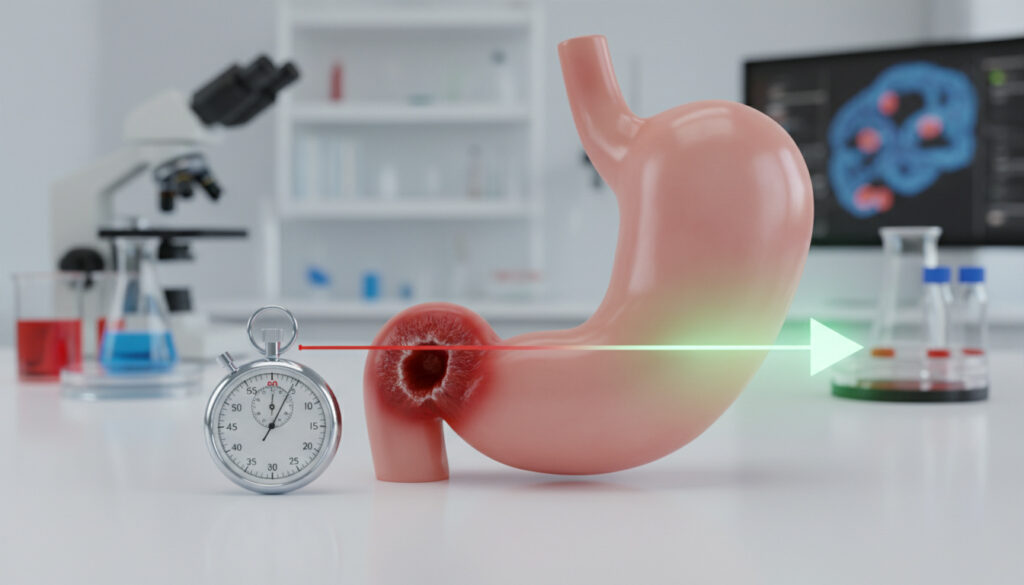
What Is the Fastest Way to Cure a Stomach Ulcer? – Proven Healing Timelines
Stomach ulcers create significant discomfort and disrupt daily functioning, prompting urgent searches for rapid resolution. Medical consensus confirms that while no instant cure exists, evidence-based treatment protocols can substantially accelerate healing and prevent complications.
The fastest route to recovery requires targeting the underlying pathology, most commonly Helicobacter pylori bacterial infection, through combination antibiotic and acid-suppression therapy. Most patients achieve mucosal healing within four to eight weeks when adhering to prescribed medical regimens and eliminating gastric irritants.
This analysis examines clinically proven treatment pathways, realistic healing timelines, and the limitations of alternative interventions.
What Is the Fastest Way to Cure a Stomach Ulcer?
Causes
H. pylori infection and NSAID use erode the protective gastric lining.
Symptoms
Burning epigastric pain, bloating, nausea, and potential bleeding.
Treatments
Antibiotics plus PPIs or H2 blockers; acid suppression is essential.
Healing Time
Four to eight weeks for complete mucosal restoration.
- No instant cure exists despite commercial claims; biological healing requires weeks.
- H. pylori eradication through antibiotics is essential for fastest recovery.
- Proton pump inhibitors represent the gold standard for acid suppression.
- Completing full antibiotic courses prevents resistance and recurrence.
- Discontinuing NSAIDs is mandatory to allow mucosal repair.
- Symptom relief occurs within days; structural healing requires four to eight weeks.
- Retesting at four weeks confirms bacterial eradication.
| Fact | Detail | Source Type | Timeframe |
|---|---|---|---|
| Primary cause | H. pylori infection | Clinical studies | N/A |
| Secondary cause | Chronic NSAID use | Epidemiological data | N/A |
| Gold standard treatment | PPIs combined with antibiotics | Medical guidelines | 4-8 weeks |
| Eradication rate | ~90% with triple therapy | Clinical trials | 5-14 days |
| Symptom relief onset | Reduction in acid pain | Patient studies | 1-3 days |
| Full mucosal healing | Complete epithelial restoration | Endoscopic studies | 4-6 weeks typical |
| Retesting recommendation | Breath or stool antigen test | CDC/NIDDK protocols | 4 weeks post-treatment |
| Recurrence risk untreated | High without cause elimination | Longitudinal studies | Ongoing |
Can Stomach Ulcers Heal on Their Own or With Home Remedies?
Limitations of Spontaneous Resolution
Peptic ulcers rarely resolve without medical intervention. H. pylori infections persist indefinitely without antibiotic therapy, and continued NSAID consumption perpetuates mucosal damage. While isolated cases of spontaneous remission occur, they carry elevated risks of recurrence and progression to hemorrhage or perforation.
Evidence for Natural Supplements
Certain natural compounds provide symptomatic relief and may support standard therapy. Probiotics found in yogurt and supplements demonstrate potential to enhance antibiotic efficacy during H. pylori eradication. Honey, garlic, turmeric, and chamomile tea contain anti-inflammatory and antibacterial compounds, though clinical evidence insufficiently supports their use as monotherapy.
Flavonoid-rich foods, including colorful berries and plantain bananas, may help protect the gastric lining when consumed alongside conventional medical treatment. However, these dietary interventions do not replace pharmaceutical protocols.
Home remedies cannot eradicate H. pylori infection or independently repair ulcerated tissue. Relying solely on natural treatments risks progression to bleeding ulcers, perforation, or gastric obstruction.
What Causes Stomach Ulcers and What Are the Symptoms?
Primary Etiology
Helicobacter pylori bacterial colonization accounts for the majority of peptic ulcer disease cases. The organism compromises mucosal defense mechanisms by inducing chronic inflammation and altering acid secretion, allowing gastric acid to erode the duodenal or gastric lining. Cleveland Clinic identifies this as the predominant cause requiring specific antimicrobial treatment.
Nonsteroidal anti-inflammatory drugs, including ibuprofen and aspirin, represent the second leading cause through inhibition of protective prostaglandin synthesis. Less frequently, rare conditions such as Zollinger-Ellison syndrome cause excessive acid production.
Clinical Manifestations
Patients typically report epigastric burning pain, particularly pronounced between meals or during nocturnal hours when acid production peaks without food buffering. Associated symptoms include postprandial bloating, nausea, vomiting, and early satiety. NHS guidance notes that dark or bloody stools and vomiting blood indicate emergency hemorrhagic complications requiring immediate intervention.
What Foods to Avoid and When to See a Doctor for a Stomach Ulcer?
Dietary Management
Dietary modifications support pharmaceutical treatment but do not replace it. High-fiber foods and probiotic-rich yogurt may bolster mucosal integrity and gut microbiome health. Conversely, alcohol, caffeine, chocolate, and spicy or highly acidic foods aggravate symptoms by stimulating acid secretion or causing direct irritation. Apple cider vinegar remedies appear frequently in popular discourse, though clinical evidence for ulcer treatment remains anecdotal.
Colorful fruits containing flavonoids, such as berries and plantain bananas, may help shield the gastric lining when consumed alongside standard medical therapy.
Medical Consultation Indicators
Immediate medical evaluation is warranted for hematemesis, melena, severe or unremitting pain, vomiting that persists, or unexplained weight loss. Diagnostic protocols include H. pylori breath testing, serological assays, stool antigen detection, or esophagogastroduodenoscopy. Mayo Clinic protocols emphasize that symptoms persisting beyond two weeks necessitate professional assessment.
Physicians recommend retesting for H. pylori no sooner than four weeks after completing antibiotic therapy to ensure accurate eradication confirmation and prevent false-negative results.
How Long Does It Take to Heal a Stomach Ulcer?
- Symptom Relief (Hours to Days): Antacids neutralize acid immediately; proton pump inhibitors and H2 blockers reduce acid production within 24-72 hours. Source: Healthline
- Treatment Initiation (Week 1): Antibiotic regimens begin for H. pylori-positive patients; concurrent acid suppression allows mucosal rest. Source: NIDDK
- Initial Healing (Weeks 1-2): Reduced acid exposure permits epithelial regeneration and early mucosal repair. Source: Johns Hopkins Medicine
- Active Recovery (Weeks 4-6): Most uncomplicated ulcers achieve complete mucosal healing under ongoing PPI therapy. Source: MedlinePlus
- Confirmation Phase (Week 4): Post-treatment H. pylori testing verifies bacterial eradication. Source: NIDDK
- Full Course Completion (Up to 8 Weeks): Refractory cases or large ulcers may require extended acid suppression through eight weeks. Source: NHS
What Is Proven About Stomach Ulcer Healing and What Remains Uncertain?
| Established Medical Consensus | Remaining Uncertainties |
|---|---|
| Triple therapy eradicates H. pylori in approximately 90% of compliant patients | Specific dietary components that actively accelerate mucosal repair beyond general nutrition |
| PPIs demonstrate superior healing rates compared to H2 blockers | Optimal probiotic strains and dosages for enhancing H. pylori eradication |
| NSAID cessation is essential for ulcer recovery | Long-term efficacy of herbal remedies as standalone treatments |
| Ulcers typically heal within 4-8 weeks with appropriate treatment | Predictive factors distinguishing patients who will experience recurrence |
| Retesting at 4 weeks post-treatment confirms cure | Whether specific stress management techniques measurably reduce healing time |
Why Is There No Instant Cure for Stomach Ulcers?
Mucosal tissue regeneration follows biological timelines that pharmacological agents cannot compress indefinitely. While acid suppression alleviates pain rapidly by neutralizing gastric secretions, structural repair of the epithelial barrier requires cellular proliferation, angiogenesis, and matrix remodeling. These biological processes proceed at fixed rates regardless of medication potency.
Additionally, bacterial eradication demands sufficient antibiotic exposure to prevent resistance development, necessitating multi-day courses rather than single-dose administration. Step-by-step treatment guides emphasize that protocol adherence, rather than seeking rapid resolution, determines ultimate outcomes. The multifaceted pathogenesis—involving acid-peptic aggression, compromised defense mechanisms, and infectious etiology—requires comprehensive treatment approaches that unfold over weeks.
What Do Medical Authorities Say About Ulcer Treatment?
Peptic ulcers form when stomach acid erodes the protective lining, mainly due to H. pylori bacterial infection or long-term NSAID use. Treatment requires addressing these root causes rather than merely masking symptoms.
Johns Hopkins Medicine
Healing starts once the cause is addressed; ulcers often heal in 4-6 weeks with treatment, up to 2 months total. Following the full antibiotic course is essential to prevent resistance.
National Institute of Diabetes and Digestive and Kidney Diseases
What Should You Do Next If You Suspect a Stomach Ulcer?
The fastest path to healing requires obtaining medical diagnosis to identify H. pylori infection or NSAID-related damage, followed by strict adherence to combination therapy involving antibiotics and acid suppressors while eliminating NSAIDs, alcohol, and tobacco. Symptom improvement typically emerges within 72 hours, though complete mucosal healing necessitates four to eight weeks of consistent treatment and lifestyle modification.
Frequently Asked Questions
How do doctors test for stomach ulcers?
Physicians utilize H. pylori breath tests, blood antibody tests, stool antigen tests, or endoscopy to diagnose ulcers. Endoscopy allows direct visualization and biopsy of the ulcer tissue.
Can I take ibuprofen if I have a stomach ulcer?
No. NSAIDs like ibuprofen inhibit protective prostaglandins and worsen ulcers. Patients must discontinue these medications and consult physicians for alternative pain management strategies.
What happens if a stomach ulcer is left untreated?
Untreated ulcers may progress to internal bleeding, perforation of the stomach wall, or gastric obstruction. These complications require emergency surgical intervention and carry significant mortality risk.
Are stomach ulcers contagious?
H. pylori bacteria can spread through contaminated food, water, or oral contact, though ulcers themselves are not directly contagious. Testing household members may prevent reinfection.
Can I drink alcohol while healing an ulcer?
Alcohol increases stomach acid production and irritates mucosal tissue, delaying healing. Complete abstinence is recommended during the four to eight week recovery period.
Do spicy foods cause stomach ulcers?
Spicy foods do not cause ulcers but can aggravate existing symptoms. The primary causes remain H. pylori infection and NSAID use, not dietary spice.
More related posts
 Virgin Media Customer Service Hours – 2025 Complete UK Guide
 Ice T – Net Worth, Biography, and Career in 2025
 How Long to Soft Boil an Egg – Complete Timing Guide for Perfect Results
 French Tip Acrylic Nails – 2025 Trends, Shapes and Maintenance Tips
 Andre Braugher – The Cause of Death and a Lasting Legacy
 Trouser Suits for Women – Complete Buyer’s Guide for 2025
 Justin Rose – Biography, Career Stats, Net Worth and Family
 iPhone 13 Pro Case – Ultimate 2025 Buying Guide for UK Users